


Find a club
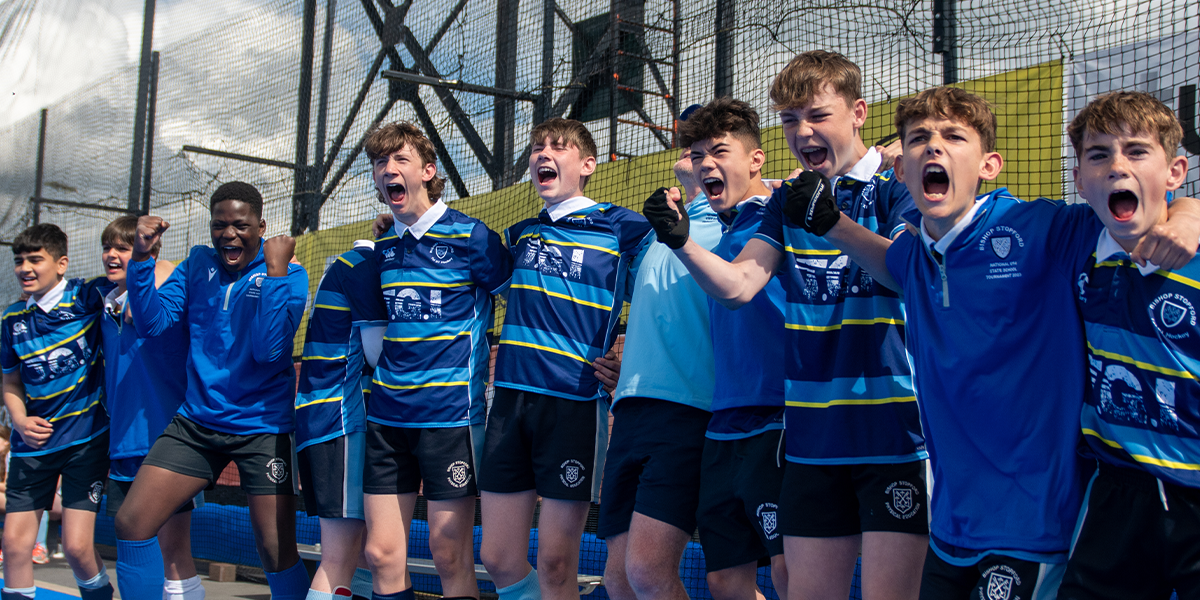
Celebrations at the Man Group National Schools Championships for Girls in 2007

Club-School Links

We believe that the Club-School links (CSL) programme will build on and enhance the existing PE and sport opportunities available to young people in schools, and through co-ordinator partnerships, young people will be guided from schools to affiliated and accredited hockey clubs linked to those partnerships.

What is PE, School Sport and Club Links (PESSCL)?

The PE, School Sport and Club Links (PESSCL) strategy is being delivered by the Department for Education and Skills (DfES) and the Department for Culture, Media and Sport (DCMS).

It is designed to increase the number of children and young people aged between 5 and 16 who take up and enjoy sporting opportunities within and beyond the curriculum.

The target is to increase the number of school children in England who spend a minimum of four hours (two within curriculum and two out of school hours) each week on high quality PE and school sport to 85% by 2008.

By building on and improving the quality of existing PE and school sport opportunities available to young people in schools, it is hoped that an increasing proportion of children will be guided into local accredited hockey clubs.

The strategy aims to promote a culture that enables and values the full involvement of every child and young person, whether as a competitor, volunteer, official or organiser. It is hoped that this will lead to a significant increase in the number of young people taking part in high quality club sport on a regular basis.

PESSCL Infrastructure

PESSCL will be delivered on a local level through collaboration between School Sport Partnerships (SSPs), County Sports Partnerships (CSP’s) & Accredited Hockey Clubs.

School Sport Partnerships

School Sport Partnerships (SSPs) are families of schools that received additional funding from the Government to come together to enhance sports opportunities for all.

Each partnership is individual.  But in developing new partnerships and expanding existing partnerships there is a partnership model (see below).

Typically Partnerships will:

  • Be clustered around a Specialist Sports College and managed by a full-time Partnership Development Manager (PDM), whose role is to strategically develop and manage the partnership
  • Include around eight secondary school partners each of which appoints a School Sport Coordinator (SSCo - an existing teacher from the PE department) who is released from the timetable for two days a week to work with their cluster of primary schools to develop after school activities and links with the local community and hockey clubs
  • Include around 45 primary or special school partners each of which appoints a Primary Link Teacher (PLT) who is released from the timetable for 12 days each year to help develop subject knowledge and leadership and to work with other schools in the partnership

Each partnership receives a ring-fenced three year grant.  The typical partnership receives a grant of £270,000 per year.  Smaller partnerships receive a little less where those with more schools than the model receive more.  The grant pays for the above posts and teacher release.  Partnerships are also encouraged to find some additional funding from other sources. The Big Lottery Fund has also given each partnership an additional grant — on average £75,000 over three years — to kick start additional out of hours sports activities designed to widen participation.

County Sports Partnerships (CSP’s)

There are currently 49 County Sports Partnerships in England. 

Each CSP is a partnership of different agencies committed to providing a high quality single system to help people to access and benefit from sport.

CSP’s play a vital role in developing more community sports opportunities for young people and supporting clubs, which is vital for the delivery of PESSCL.

CSP’s aim to identify local needs and undertake a strategic and planning role to ensure optimum use of existing and potential resources.


There are various PESSCL strands…England Hockey support the following:

1. Club School Links (CSL)
2. Step into Sport (SiS) Volunteering
3. Professional Development (for the curriculum)

1.  Club School Links (CSL)

If young people enjoy PE and sport at school, they are more likely to carry on participating throughout life. If they are used to taking part in club sport whilst at school, the chances are they will carry on in sport once they leave school. This means that England Hockey, clubs and schools need to assist all young people to move easily from school to club.

The CSL programme is an integral part of breaking down club boundaries, sharing good practice and stronger / larger clubs assisting smaller clubs in the community. 

ClubsFirst has provided a basis for wider club action and development planning.  Although primarily aimed at junior age groups, ClubsFirst has been used to encourage whole club involvement.

Much of the above will not be new to some and many will already be doing some elements.  However, by integrating the CSL tool into these wider development processes rather than addressing it as an initiative, England Hockey feel that it can achieve broader sustainable outcomes as a result of the CSL programme.

The CSL programme will enable England Hockey to address some of the key priorities within youth hockey; participation, recruitment and retention.  Consequently, any awarded CSL funding from England Hockey will be viewed as a tool for development, not an initiative or stand alone project – sustainable clubs is the core outcome.

School / club links will build on and enhance the existing PE and sport opportunities available to young people in schools, and through coordinator partnerships, young people will be guided from schools to affiliated and accredited hockey clubs linked to those partnerships.

England Hockey annually reports to Sport England and the DCMS on three PESSCL Key Performance Indicators (KPI’s)

  1. Number of Accredited Clubs (ClubsFirst)

  2. Number of formal club school Links
    A “formal link” is defined by the following characteristics (Sport England, 2006)


    Where nominated ‘CSL officers’ from a club and SSP have met and recorded an agreed set of actions and completed all required documentation (with agreed actions)


    Where activity is run by, or supported by, members or representatives of the named club and school who accept joint responsibility for the development of hockey within the community


    Where the activity is ongoing

  3. Number of participants between 5yrs and 16yrs taking part in hockey through the club school links programme

A “participant” is someone who attends a club run session an average of 12 times a year with an accredited club” (Sport England, 2006)

How is England Hockey delivering the Club-School link Strand?

England Hockey is inviting accredited (ClubsFirst) clubs to establish a ‘formal link’ with local School Sport Partnership(s). Clubs will be asked to nominate a ‘Club-School Links Officer’ (CSLO) who will take the lead role in developing effective partnerships.

With the assistance from local Hockey Development Officers (HDO’s), CSP’s and England Hockey Regional Staff, these formal club school links will be a driving force in the delivery of Hockey within local areas.
The CSLO will be required to administer the partnership process, which initially in phase one involves getting the Partnership agreement and the KPI / case study forms completed and returned to England Hockey.

In phase two the CSLO will be required to sit on the Local Partnership Development Group (to be developed by England Hockey) who will put into place a 12 month action plan and return key information (case studies, numbers of participants and number of schools within the partnership) which highlights the development of hockey at a local level.

In return for this work England Hockey will award PESSCL funding to the formal partnerships, which aid the short & long term strategic aims of the NGB.

2. Step into Sport (SiS) (Volunteering)

Step into Sport (SiS) is a programme that focuses on encouraging children, young people and adults to begin and continue an involvement in sports leadership and volunteering.

Sport relies on 1.5 million volunteer officials, coaches, administrators and managers. The England Hockey volunteer strategy will ensure that local clubs are geared up to receive, develop and deploy a steady supply of new volunteers. The programme has clear links to citizenship.

How is England Hockey delivering the Step into Sport Strand?
England Hockey has introduced a ‘new’ Leadership and Leadership Plus Award Scheme. The programme aims to provide parents, students, teachers, players and other potential leaders with a basic knowledge of the key areas of hockey (umpiring, coaching and managing) alongside the confidence to introduce and develop aspects of the game safely to players. 

Having completed the Leadership Award or one of the Foundation Awards, candidates can register (at no extra cost) onto an exciting new programme, the Leadership Plus Award; volunteers are rewarded specifically for their time given to hockey in their local community (club-school link).  As part of this scheme a candidate can achieve Bronze, Silver and Gold certificates at 20, 40 and 60 hour stages of their voluntary experiences.

3. Professional Development (for the curriculum)

In order to ensure two hours of high quality PE and school sport, teachers and others (coaches going into school curriculum time) need development and support from England Hockey. Our Professional Development programme will ensure that these key deliverers within the curriculum have the tools and expertise that they need. All schools in England are able to access the programme.

If we can raise the standard of hockey delivery within the school curriculum, clubs will be benefited by potentially having more young players - having already gained a grasp of the basic skills  - interested in joining them.

How is England Hockey delivering the Professional Development Strand?
There are four Coaching for Teachers (CfT) courses available (plus a Quicksticks course);

  • Hockey Fundamentals
  • Hockey Transition
  • Introduction to Game Play
  • Preparing for Competitive Hockey

The courses have been commended by Sports Coach UK (scUK) for their “educational content” and it is envisaged that teachers, trainee teachers (PGCE/QTS students) community coaches, coaches, undergraduate students or volunteers will use the courses to assist their delivery in the partnership.

Why make an effective link?

Benefits for the partnership

  • To increase the number of young people participating in hockey and to give them more opportunities to play the game, both within school and out of school hours
  • To improve Coach / Teacher Education for both club and school staff
  • To improve opportunities and education for pupils and staff in umpiring and officiating
  • Leadership for pupils – opportunities to work alongside coaches and other trained club officers as well as formal awards such as the Leadership and Leadership Plus
  • Access to sponsorship – bringing existing and new sponsor relationships to the partnership
  • Publicity and promotion of hockey within the school, club and externally through the media. For example - the ‘art & design’ curriculum could facilitate the promotion of hockey within the partnership
  • Shared Facilities – playing (ATP), training (indoor and outdoor, gymnasium & fitness studios), clubhouse, conference / meetings, social events etc
  • Sharing of equipment including sticks, balls and goalkeeper kit
  • Competition – supported and organised competition within and / or between schools at school or club facilities
  • Social for pupils and staff – opportunity for involvement in social club environment
  • Funding – support with access to funding where a link enhances a funding bid application or where a club can share resources. Accessing funds that schools are not eligible for and community groups are, and vice versa

Benefits for young people in Hockey
The fundamental aim of a Club‑School Link is to develop the very best level of quality and opportunity for young people both in and out of school.

By extending the opportunity for young people to continue their sporting development beyond the school PE curriculum, hockey clubs can enhance the opportunities for young people to develop into high quality players, leaders, managers and coaches. It will also allow athletes and potential athletes from non-hockey playing schools to have an opportunity to join the sport of hockey.

It has been shown that young people in a sports club environment will;

  • Balance their commitment to, and involvement in, school and the club
  • Understand how their involvement in PE, school and club sport contributes to a balanced, healthy lifestyle
  • Recognise how PE prepares them for their involvement in clubs as a junior and beyond school age
  • Choose club and school programmes that are suited to what they want to achieve
  • Move confidently between school and club
  • Take part in a range of activities in both the school and club environments
  • Show commitment by making themselves available for matches, festivals, club activities such as committee meetings, social and fund-raising events, take responsibility for not letting down others in the club and help to lead, coach and organise activities
  • Develop confidence by taking part as a player, leader, administrator, volunteer, helper or spectator and being aware of their own and their club’s achievements
  • Show the desire to improve and achieve in relation to their abilities


Safeguarding children through PESSSCL

England Hockey believes that the protection of children is paramount and has robust child protection policies and procedures in place to support this principle.  England Hockey is promoting the following minimum operating standards for partners involved in the PESSCL programme.

Criteria in place as part of the ClubsFirst accreditation:

  • Clubs must have adopted a child protection policy
  • All partners must be aware of the reporting procedures should there be any concerns about a child or adult behaviour in relation to a child
  • All coaches, officials, volunteers working with children and young people must adhere to codes of conduct appropriate to their position
  • At least two members of the club, one of whom should be a coach, must have attended child protection training, minimally scUK’s ‘Good Practice and Child Protection’ workshop
  • The club must have access to a fully equipped first aid kit and this must be available during all club activities

Additional criteria

  • Each club must have a nominated person as their Welfare Officer, who will be the lead person for all child welfare related matters and the first point of contact if there are any child related concerns
  • All people who are in regular supervisory contact with young people within PESSCL must have completed a Criminal Records Bureau (CRB) Enhanced level check (through the EH Registered Body Service)


PESSCL Funding

Accredited Clubs who form an official EH CLUB-School Partnership Link will be awarded the following:

  • Support to run a Quicksticks course to train coaches and teachers from within the CSL.
  • 50% funding for 20 candidates on the Leadership/Leadership plus course resources
  • 50% funding for 10 candidates on a Coaching for Teachers course resources
  • Use of the Ambassador scheme- Partnerships can request for an ambassador (NAG or senior international player) to attend the partnership for promotional events, assisting with delivery, presentations etc for one day per year
  • An A2 Hockey Poster for every school within the named linked School Sport Partnership
  • Possibility to be nominated to CCPR for ‘The Sports Club of the Year Awards’. Visit www.ccpr.org.uk for further information

More information about the Leadership programme and the Coaching for Teachers can be found under "Coaching for Teachers" and "Leadership Award" using the navigational menu on the left hand side.