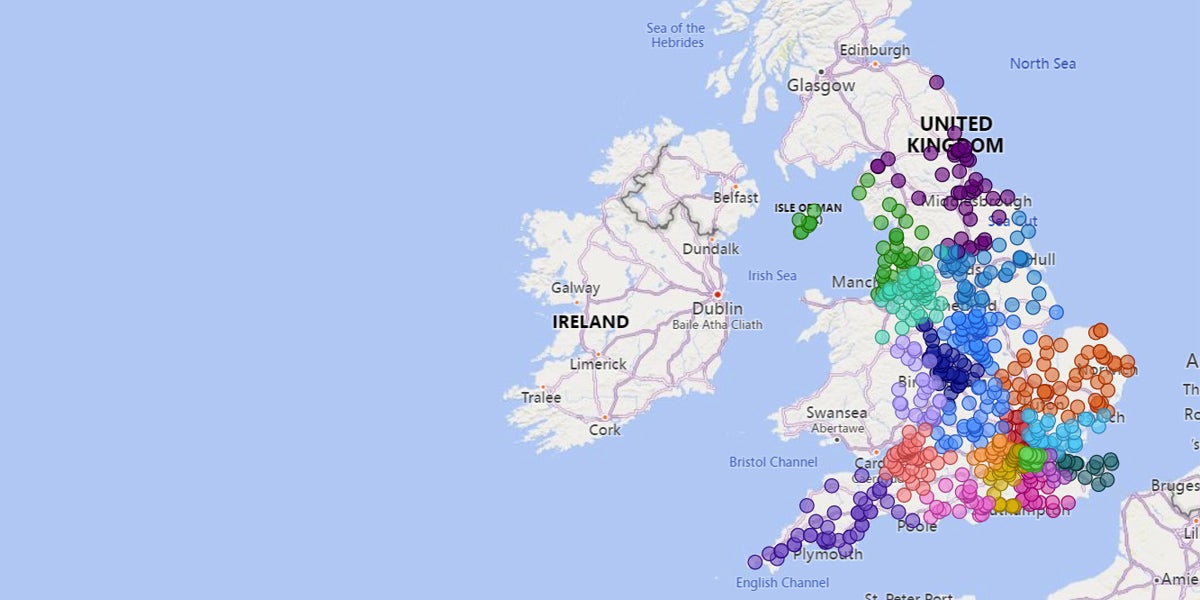

The Talent Academy is where England Hockey supports the country’s highest-potential young players to develop. Each Academy works with around 30 players per gender, including at least one U16 and one U18 age-qualified goalkeeper. It is the main route into the England Age Group (EAG) programme.
Being part of an Academy means high-quality training, assessment against a clear framework, game play, and an Individual Development Plan (IDP) for every player.
-
Every player begins their journey by being nominated to a specific Talent Academy — so it helps to know which Academies there are and where they sit.
There are 24 Talent Academies across England: 22 club-based licences plus England Hockey-run North West and South East (Kent) Academies. Players are allocated to an Academy based on their main hockey club, though a transfer to a closer Academy can be requested during the nomination process to help with parental logistics.
Each Academy takes around 30 places per gender (roughly 30 boys and 30 girls), including at least one U16 and one U18 age-qualified goalkeeper.
Area Talent Academies North West North West (England Hockey - run), Timperley North East University of Durham Yorkshire Sheffield (Yorkshire) Midlands Beeston, Sutton Coldfield, North Staffordshire, Stourport East Bury St Edmunds (East), Cambridge, Old Loughtonians South West University of Bristol, University of Exeter, Bath Buccaneers South Central South Coast, Reading, Oxford Hawks London Hampstead & Westminster, Wimbledon, Surbiton South East Guildford, Sevenoaks, East Grinstead, South East (England Hockey - run) Finding your Academy
Players are allocated to a Talent Academy based on the club they play their junior hockey at. If home or school is closer to a different Academy, a transfer can be requested when accepting a nomination. Players already in an Academy who move club, school or home should email talentacademy@englandhockey.co.uk to request a transfer, providing the reason and detail (location of home/school).
Who is the Talent Academy for?
The Academy is aimed at players in school Years 8 to 13, but it is targeted at Group 2 — the core age range. Younger players (Group 1) are included as early developers and to align with National Age Group Hockey, and older players (Group 3) are included by exception only.
Eligibility is set by month of birth within each school year, not just the school year alone, so the groups are shown below. Each squad must also include at least one U16 and one U18 age-qualified goalkeeper.

How to read the age profile
Group 2 is the target. Years 10, 11 and 12 (younger half) are the core of the Academy — this is where most places sit (minimum 5–6 players per year).
Group 1 — early developers. Years 8–9 are included for players developing ahead of their age, and to match National Age Group Hockey (maximum 4).
Group 3 — by exception. Year 13 (and oldest Year 12) players are included only by exception (maximum 5).
Important Year 8 rule: Year 8 players are counted by calendar year, not school year — only those born September to December are eligible; those born January to August are not, with no exceptions.
England Age Group (EAG) hockey uses calendar year of birth, in line with the international hockey system. Talent Academy eligibility is aligned to this same approach. Because of this, players born between September and December may sit in a different representative age group than their school year alone would suggest — this is expected, and keeps a consistent pathway from Talent Academy through to EAG and international hockey.
-
An Academy season runs from August to July. The balance shifts through the year: heavier training early on, more assessment around the nomination windows, and more game play at key points.

A few things worth knowing
- Breaks: the summer break starts at the end of the state school summer term and runs for three weeks. There is also at least one week off over Christmas and at Easter.
- Individual Development Plans (IDP): every player gets an IDP with four 1-to-1s (about 15 minutes each) plus around 60 minutes of individual attention across the season. IDP touchpoints are spread through the year (IDP 1–4).
- Cluster games: games between nearby Academies and clubs, used for development and assessment.
- TA Excel / Super Series: the national assessment pathway beyond the regular season — see “The pathway beyond the Academy” below for how it works.
- Retain and release: current players are reviewed through the season, with retain/release decisions around May and squads for the next season confirmed in July. Any player released receives written feedback.
- Extra games: Academies are always free to arrange additional games with other Academies or clubs that fit their plan and align with the England Hockey theme of focus.